He won't ask you
And you may not know where to start. The book covers what is happening to his body and his moods in plain language, so he can read it privately and come to you when he's ready.
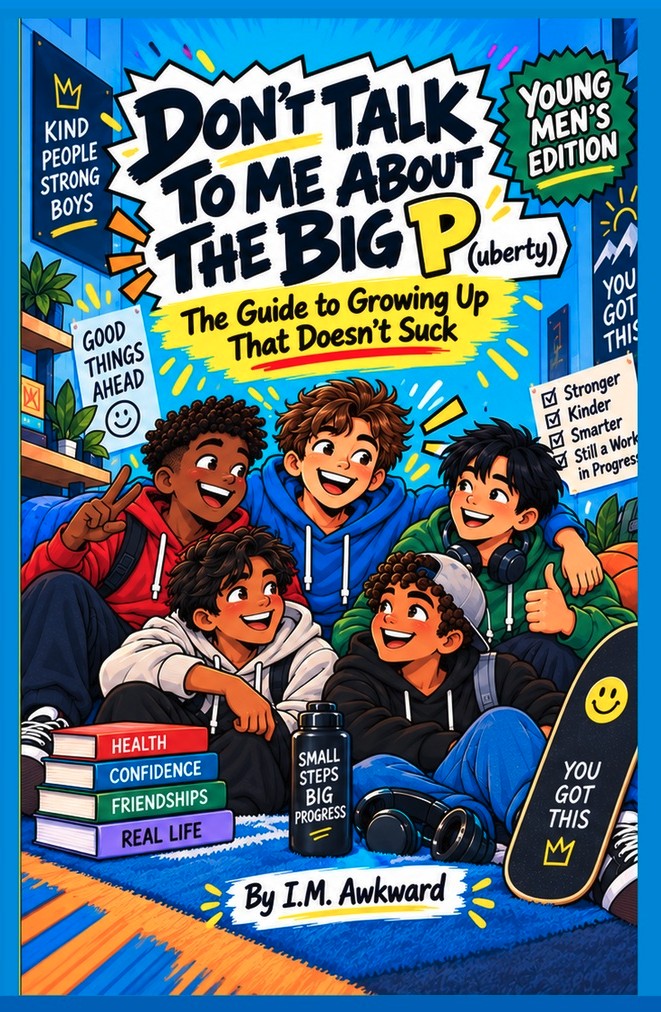
A puberty guide for boys ages 12 to 15
A straight-talking, fact-checked guide to growing up, written so he will actually read it, and so you don't have to figure out what to say.
Every fact in the book is backed by a citation to a trusted medical or government source.
Fact-checked. Every claim cited to a trusted source.
Age-appropriate. Written for 12 to 15 year olds.
Honest and funny. Never mortifying, never preachy.
Boys this age have questions and almost never ask them out loud. So they search online, where the answers range from unhelpful to flat-out wrong. This book gives him a better place to look.
And you may not know where to start. The book covers what is happening to his body and his moods in plain language, so he can read it privately and come to you when he's ready.
Nothing is pulled from random websites. Each fact is tied to a citation from a respected medical or government source, so you can check it yourself.
The tone is a friendly older cousin, not a health-class film. Humor helps a nervous 13-year-old keep reading.
Ten topics, each short enough to read in one sitting.
Written for ages 12 to 15. Pregnancy, STDs/STIs (sexually transmitted diseases and infections), and other topics for older teens are saved for a planned guide for ages 15 to 17.
Many of us were handed an awkward pamphlet and a mumbled "any questions?" This is the book we wish we had been given.
Looking for help with the parent side of the conversation? Visit growingupdaily.com for everyday conversation starters.
An honest review takes two minutes and helps another family find the book. Pick where you would like to leave yours.
Both open in a new tab. You will need to sign in to your Amazon or Google account. Thank you!
Join the list and the guide is emailed to you right away. You can download it on the next page, too. You'll also hear first about the companion guides for girls and for parents.
Free guide also in: 简体中文 · 繁體中文 · Tiếng Việt · 한국어
Sorry, something went wrong. Please check your email address and try again.
If you work with boys this age, get a one-page summary of the book: who it is for, what it covers, and how it is sourced. It is emailed to you right away.
It is written for boys ages 12 to 15. Readers from 11 to 17 may find it useful, but the content is chosen to suit the younger end of that range.
Yes. It sticks to the changes of puberty, hygiene, emotions, school, friendships, and online life. Pregnancy and STDs/STIs (sexually transmitted diseases and infections) are intentionally left out and saved for a planned guide for ages 15 to 17.
Every fact is backed by a citation to a trusted source, such as a medical or government institution. Nothing is taken from unsourced websites.
Because everyone has been the awkward kid. The pen name is a reminder that nobody has to have it all figured out.
Yes, those are planned. A companion guide for girls, a full parents' guide, and a guide for ages 15 to 17 are all in the works. Join the list to hear first.
The paperback is available now on Amazon.